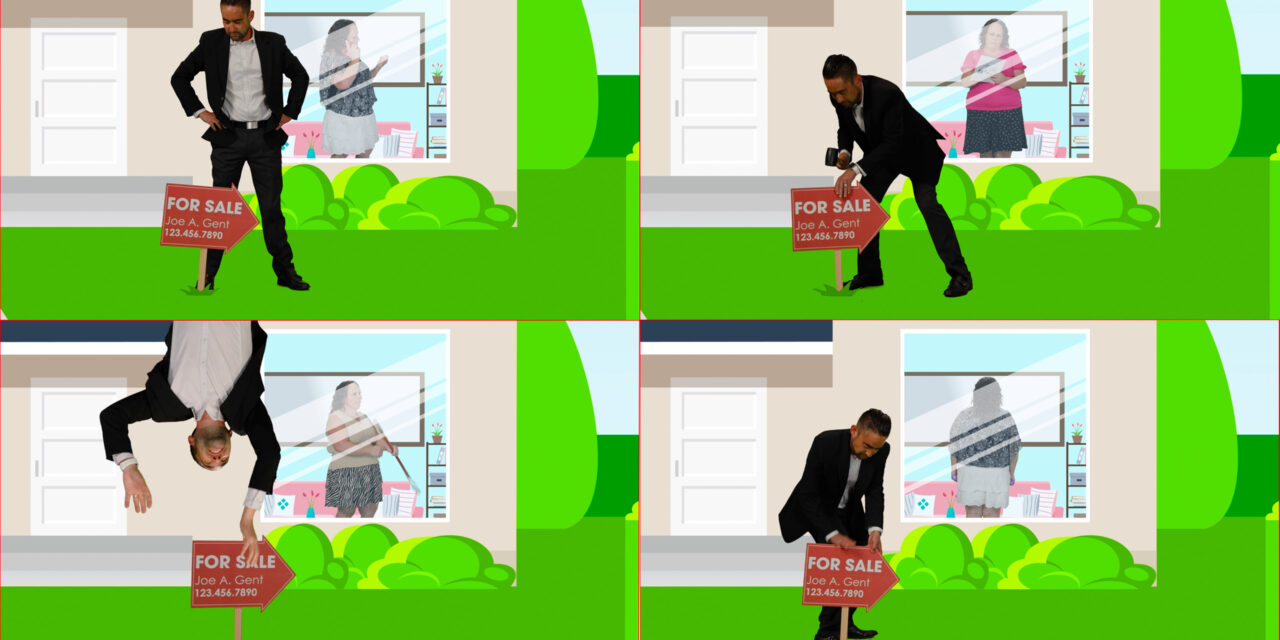
Why this episode matters: Placing real estate signs on private or public property without permission is a misdemeanor public nuisance in California, making the broker liable for local government enforcement and penalties under the Penal Code. Knowledge of the rules is your reputation — and money — saved.
Get permission first
Consider an agent who, on behalf of a seller of real estate, advertises the seller’s property by placing a directional “For Sale” sign on a neighbor’s property without first obtaining the neighbor’s permission.
The neighbor discovers the “For Sale” sign on their property and removes it. However, the seller broker continues to replace the sign on weekends without permission from the neighbor.
Does the neighbor have recourse against the broker?
Yes! Placing a sign on private property without the property owner’s permission is a misdemeanor public nuisance.
Preventing a public nuisance is the responsibility of local government authorities on a complaint from a property owner who does not consent to the placement of directional signs. [Calif. Penal Code §§556.1, 556.3]
Further, it is a misdemeanor public nuisance to place a “For Sale” or a directional sign on public property without government permission, such as on a sidewalk right-of-way or at the curbside. [Pen C §556]
Cities and counties often refuse or severely limit the granting of permission for placement of “For Sale” signs on public property, such as street corners. Instead, the agency enforces the penalties allowed by the California Penal Code. [Pen C §556]
When an agency allows “For Sale” signs, a special permit is issued on payment of a use fee. Further, agencies often only allow “For Sale” signs for the sale of parcels in a subdivider’s development.
Knowing these limitations prevents exposure to fines, the loss of signs and worse — a disgruntled client. If you’re unsure about sign placement, seek information from local authorities and HOAs before placing your signs.
In this case, knowledge is your reputation and money saved.
Authorization to place a sign on another’s property
When an agent wants to place a sign on private property not owned by the seller they represent, the agent uses an authorization form to obtain the third-party property owner’s consent. [See RPI Form 138]
The Authorization to Post Directional Sign on Private Property form published by Realty Publications, Inc. (RPI) documents:
- the property owner’s name and address;
- the name and address of the property the agent listed for sale, along with their broker’s and agent’s names;
- the owner’s consent to the broker erecting a directional sign on their property;
- when the sign will be placed and removed;
- the general location of the sign;
- a general description of the sign; and
- signatures of the agent and owner, confirming the sign may be placed on their property. [See RPI Form 138]
Mobilehome regulations
A mobilehome seller may place a “For Sale” sign:
- in the window of their mobilehome; or
- outside the mobilehome facing the street.
Signs posted outside of the mobilehome may be of an H-frame or A-frame design and need to face the street. However, they may not extend into the street. [CC §798.70]
Signs in mobilehome parks:
- may be up to twenty-four inches wide and thirty-six inches high; and
- contain the name, address and telephone number of the mobilehome seller, the seller broker or their agent. [CC §798.70]
The right to display mobilehome “For Sale” signs extends to:
- brokers;
- joint tenants;
- heirs; or
- successors who acquire ownership on the seller’s death.
Also, mobilehome sellers and their brokers may display an “Open House” sign in the same locations as “For Sale” signs, even when the mobilehome park prohibits “Open House” signs.
Tubes or holders for leaflets with information on the mobilehome being advertised may be attached to either the “For Sale” sign or to the mobilehome. [CC §798.70]