We are delighted to introduce a timely, pragmatic new training suite for California licensees: Artificial Intelligence Training: Harnessing AI While Managing Risk™.
This premium training fully illustrates how to safely augment your practice with AI-powered tools while maintaining absolute regulatory compliance — without sacrificing human intuition. Over the coming weeks, the firsttuesday Journal will feature exclusive excerpts from this multi-media suite.
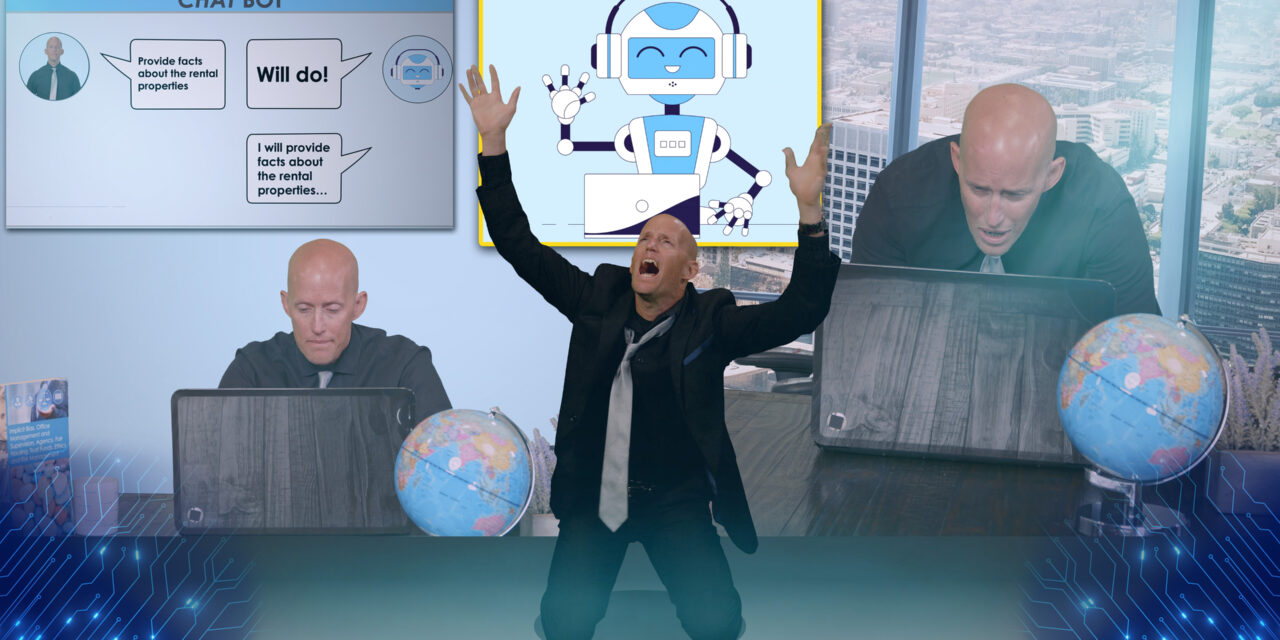
This third installment dramatizes a critical DRE parallel: an AI chatbot functions exactly like an unlicensed human assistant — meaning its output requires absolute broker oversight to avoid unlawful practice.
The complete, video-focused Artificial Intelligence Training™ is available at no additional charge to students enrolling in any firsttuesday licensing or renewal course — a FREE service to students. Or it may be separately purchased for $35.
Exclusively Californian: specifically firsttuesday.
An AI “error” is but a failure in supervision
An employing broker’s duty to supervise their agents is absolute. For a corporate broker, that duty falls solely on the designated officer (DO) qualifying the corporation as a licensed broker.
The duty is mandated, extending to all activities of their agents and broker-associates when they act within the scope of their employment with the broker — plus every tool an agent uses, including AI.
When an agent’s reliance on automated data results in a financial detriment to others, the “silicon” mistake becomes a very real “flesh” liability for the supervising broker.
Remember: In the eyes of the DRE, no such thing as an AI error exists — it is a failure in supervision at all levels.
When an agent follows a hallucinating bot into a legal minefield, the broker’s license is put on the line.
The DRE can’t discipline a piece of software, but it certainly can discipline the broker charged with oversight of its use.
As anyone who uses it well knows, AI sometimes hallucinates and, well, says and does strange things.
To this end, all AI-generated materials need to be fact-checked for compliance with California rules and property facts — always.
Further, brokers need to caution their agents against using AI for advice on decisions they make when rendering transaction services and activities which require a real estate license. Best they check with any team members and the employing broker for advice.
The unlicensed assistant parallel
The DRE draws a direct comparison between allowing AI-powered tools to perform tasks requiring a license to having an unlicensed human assistant perform tasks requiring a license — both being unlawful conduct.
Like an unlicensed assistant, an AI chatbot cannot be disciplined by the DRE, and owes zero fiduciary duties to the consumer.
For example, consider a property owner’s leasing agent who is a licensed real estate broker. The broker installs an AI chatbot on their website to answer tenant-related inquiries.
The instructions the broker gives the chatbot are fairly vague, limited to facts about the rental properties they manage and a way for the chatbot to book appointments for the broker to show the property to interested tenants.
With the AI chatbot installed and basic instructions provided, the broker takes it easy and days pass.
Later, after the chatbot has been in use on the website, the broker discovers the chatbot has also been discussing pricing, terms and conditions of the broker’s rental properties they manage, a phenomenon referred to as bleed since the chatbot, like a recalcitrant agent, acted outside of the authority directly given to it.
Here, the broker is liable for allowing their “unlicensed assistant” — the chatbot — to conduct activity requiring a license — discussing the pricing, terms and conditions of the rental property.
Even though the broker did not instruct the chatbot to do so, the broker is on the hook for not providing enough supervision over their AI representative — here, checking to ensure the chatbot was lawfully sharing accurate information limited in scope to what may be properly shared by an unlicensed broker assistant.
What can an AI chatbot help with?
What can an AI chatbot help the broker with?
Some common activities a chatbot may conduct for the broker include:
- generating leads by taking contact information from website visitors;
- receiving and delivering documents;
- placing ads; and
- scheduling appointments.
As an unlicensed assistant, the chatbot may not:
- enter into representation agreements;
- take part in any property disclosures or negotiations which may lead to the creation of a real estate transaction [California Business & Professions Code §10131(a)];
- discuss a property’s price or terms;
- discuss any type of property conditions; or
- discuss any aspects of an anticipated or present transaction. [Spielberg v. Granz (1960) 185 CA2d 283]
Editor’s note — Stay tuned for the next excerpt of Artificial Intelligence Training: Harnessing AI While Managing Risk™.
Get the full training suite today — FREE — with any enrollment in our Agent Licensing, Broker Licensing, DRE CE or NMLS CE courses.
Purchase the training separately as a standalone masterclass for $35.