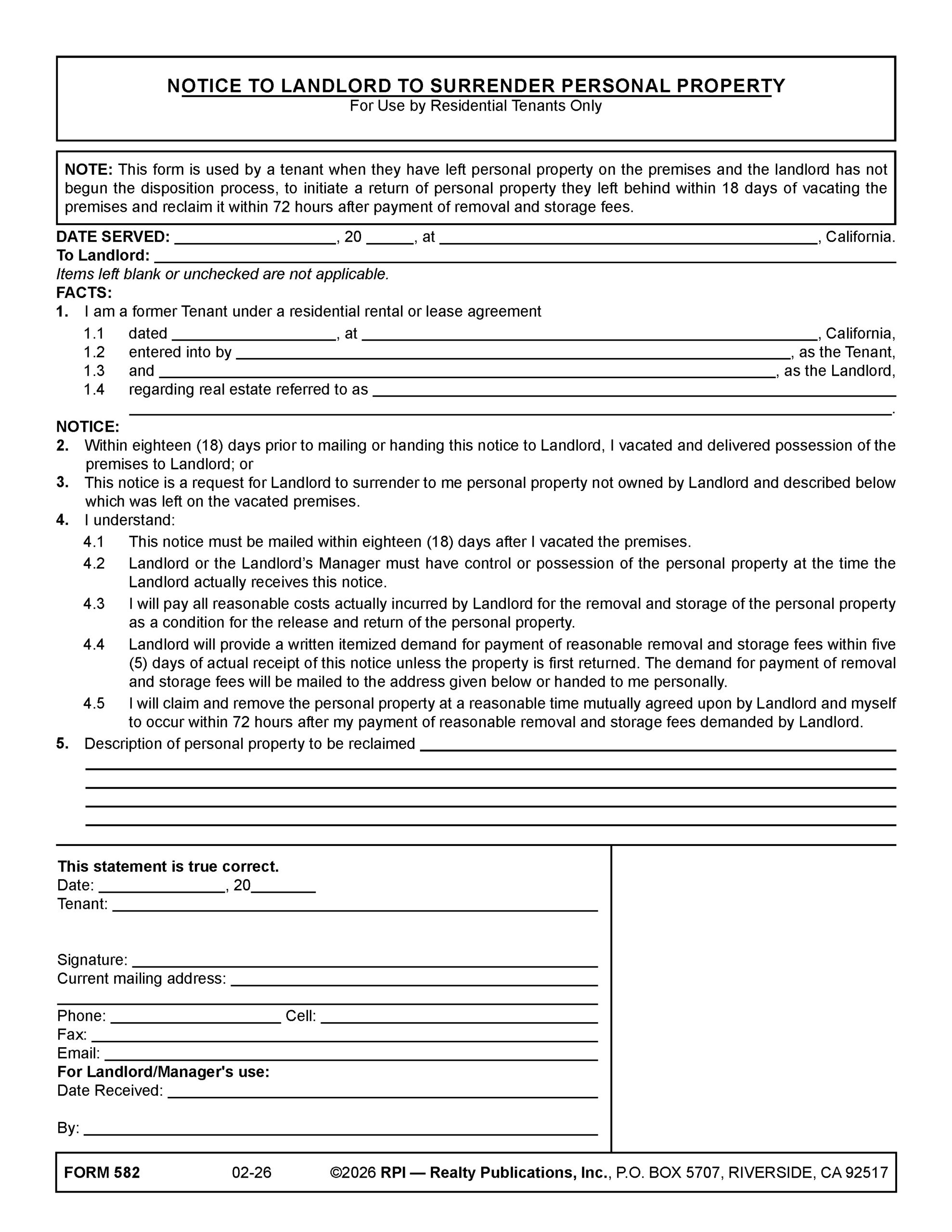
This form is used by a tenant when they have left personal property on the premises and the landlord has not begun the disposition process, to initiate a return of personal property they left behind within 18 days of vacating the premises and reclaim it within 72 hours after payment of removal and storage fees.
Returning personal property after a tenant vacates
Two separate statutory procedures exist for the return of personal property left on the premises by a tenant. One is initiated by the landlord or property manager, the other by the tenant.
Residential and commercial landlords and their property managers may initiate (and control) the process of returning or disposing of the tenant’s personal property. The notice of right to reclaim personal property prepared by the property manager needs to be personally served or mailed to the tenant who vacated and left the personal property. The notice advises the tenant of their right to reclaim or abandon the personal property. This process is called the landlord-initiated disposition procedure. [See RPI Form 581 and 584]
The other procedure allows a residential tenant acting within 18 days of vacating the premises to initiate a return of personal property they left behind. By handing or mailing to the landlord or property manager a notice to landlord to surrender personal property, the tenant may reclaim personal items left behind. This is called the tenant-initiated recovery procedure. [CC §1965; See RPI Form 582]
The property manager is not required to use the landlord-initiated disposition procedure when the tenant leaves personal property behind. [CC §1981]
However, a property manager who sells or disposes of a tenant’s personal property by other than these two procedures can be challenged for their handling of the belongings.
For example, a tenant claims their personal property was left behind inadvertently, not abandoned. The property manager is not entitled to sell or dispose of the tenant’s personal property unless the property manager first establishes the tenant’s actual intent is not to reclaim the personal property, but to abandon it.
The preferred method for establishing the tenant’s intent to abandon the property left behind is the landlord-initiated disposition procedure. The tenant is notified of their right to reclaim the property they left behind and their need to respond to avoid its disposal. [See RPI Form 581 and 584]
Residential tenant-initiated recovery
Only a residential tenant may deliver to the landlord or the landlord’s agent a written request for the return of personal property left in the vacated unit, called a notice to landlord to surrender personal property. [See RPI Form 582]
The residential tenant’s request for the landlord’s release of belongings the tenant left behind needs to:
- be written;
- be mailed or handed to the landlord or property manager within 18 days after they vacate the unit;
- include the tenant’s current mailing address;
- contain an identifiable description of the personal property left behind;
- be received by the landlord or property manager while they are in control or possession of the personal property; and
- be received by the landlord or property manager before they have mailed a notice of right to reclaim personal property, commencing the landlord-initiated disposition procedure. [CC §1965(a)]
Within five days of receiving the tenant’s notice to surrender personal property, the property manager mails, emails or hands the tenant a written demand for reasonable removal and storage costs. This written demand itemizes the costs for removal and storage to be paid before the tenant can remove the property. [CC §1965(a)(3); See RPI Form 582-1]
The tenant or other owner of the personal property is not required to pay any storage costs when:
- their personal property remained on the rented premises; and
- they reclaim their personal property within two days of vacating the premises.
Once the tenant has received notice, it is then the tenant’s responsibility to contact the property manager and arrange a mutually agreeable date, time and location for the tenant to claim and remove their personal property. However, the tenant or the tenant’s agent needs to retrieve the personal belongings within 72 hours after the tenant pays storage charges demanded by the property manager. [CC §1965(a)(4)]
After a tenant mails the property manager a request to surrender personal property, the property manager might receive another request for the same items from the tenant’s roommate, a secured creditor or other person with an interest in the property.
The first request received by the property manager controls the return of the property left behind. [CC §1965(d)]
The landlord is not obligated to the roommate or anyone else who makes a later request for the same personal belongings.
Which process controls?
The tenant-initiated process for residential rentals does not apply when the property manager first mails, emails or personally delivers the notice to the tenant before the landlord or property manager receives the tenant’s notice to surrender personal property. [CC §1965(c)]
But what happens when the property manager’s notice to reclaim property and the tenant’s request to surrender the property pass in the mail?
The landlord-initiated process begins the moment the property manager deposits the notice of the tenant’s right to reclaim property in the mail (first-class, postage prepaid). The tenant-initiated process does not begin until the property manager personally receives the tenant’s request. [CC §1983]
The property manager who neglects to mail the notice before actually receiving a tenant’s request is required to respond to the tenant’s request. Under abandonment rules, the landlord no longer controls disposition.
Conversely, when the property manager can show they deposited either the notice of abandonment (which covers both the rented real property and the tenant’s personal property) or the notice to reclaim personal property in the mail before they actually received the tenant’s notice to surrender, the tenant abides by the landlord-initiated disposition procedure.
Residential landlord violations
Consider a residential tenant who has vacated and timely hands the property manager a notice to surrender personal items they left behind.
In turn, the property manager makes a demand on the tenant to pay removal and storage costs. The tenant promptly pays the removal and storage costs.
When the property manager fails to hand over the items within 72 hours after the tenant (or tenant agent) pays storage and removal fees, the landlord is liable for:
- damages for the value of the personal items;
- $250 for each violation; and
- attorney fees. [CC §1965(e)]
This tenant-initiated procedure is entirely avoided when the property manager merely sends by first-class mail either the notice of abandonment (both real estate and personal property) or a notice to reclaim personal property before they receive the tenant’s notice to surrender the property. The notice to reclaim personal property may also be emailed to the tenant. [See RPI Form 581 and 584]
Analyzing the notice to landlord to surrender personal property
A tenant uses the Notice to Landlord to Surrender Personal Property — For Use by Residential Tenants Only published by RPI when they have left personal property on the premises and the landlord has not begun the disposition process. The form allows the tenant to initiate a return of personal property they left behind within 18 days of vacating the premises and reclaim it within 72 hours after payment of removal and storage fees. [See RPI Form 582]
The Notice to Landlord to Surrender Personal Property contains:
- the date the tenant served the notice on the landlord;
- the landlord’s name;
- Facts, including the:
- date of the residential rental or lease agreement;
- tenant’s identity;
- landlord’s identity; and
- real estate involved [See RPI Form 582 §1];
- Notice confirming:
- within 18 days prior to mailing or handing the notice to the landlord, the tenant vacated and delivered possession of the premises to the landlord [See RPI Form 582 §2]; or
- the notice is a request for the landlord to surrender to the tenant personal property not owned by the landlord which was left on the vacated premises and described in the blank space provided [See RPI Form 582 §3];
- the tenant understands the:
- notice must be mailed within 18 days after the tenant vacated the premises;
- landlord or the landlord’s manager must have control or possession of the personal property at the time the landlord receives the notice;
- tenant will pay all reasonable costs incurred by the landlord for the removal and storage of the personal property as a condition for the release and return of the personal property;
- landlord will provide a written itemized demand for payment of reasonable removal and storage fees within five days of receipt of the notice unless the property is first returned. The demand for payment of removal and storage fees will be mailed to the address given in the notice or handed to the tenant personally; and
- tenant will claim and remove the personal property at a reasonable time mutually agreed upon by the landlord and tenant to occur within 72 hours after the tenant’s payment of reasonable removal and storage fees demanded by the landlord [See RPI Form 582 §4];
- Blank for the tenant to list a description of personal property to be reclaimed [See RPI Form 582 §5]; and
- Signature: the tenant signs and dates the form and provides their current mailing address and contact information. The landlord provides the date they received the notice. [See RPI Form 582]
Form updated 2026.
Form navigation page published 10-2026.
Form-of-the-Week: Tenant notices to landlord — to vacate, and to surrender personal property — Forms 572 and 582
Form-of-the-Week: Abandonment and Right to Reclaim Personal Property —Forms 581, 583 and 584
Article: Surrender cancels the lease agreement
Recent Case Decision: Is a landlord liable for unintentional damage to a holdover tenant’s personal property?
Page: Property Management 101